Veterinary
Drug Name:
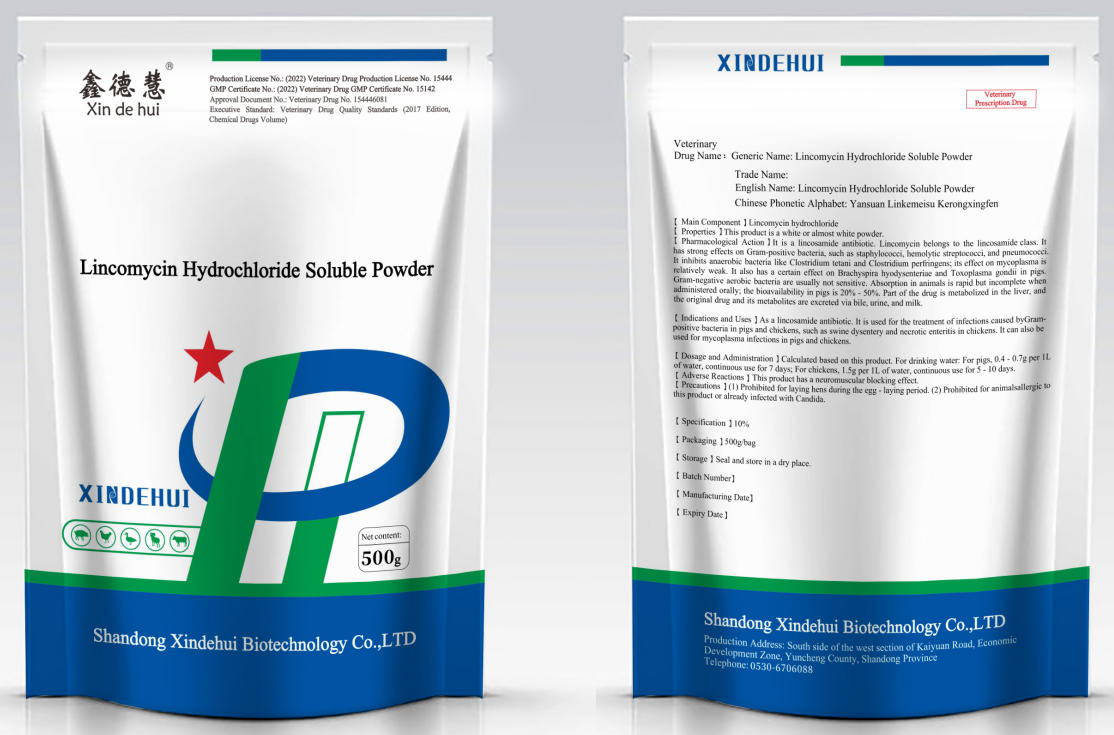
Generic Name: Lincomycin Hydrochloride Soluble Powder
Trade Name:
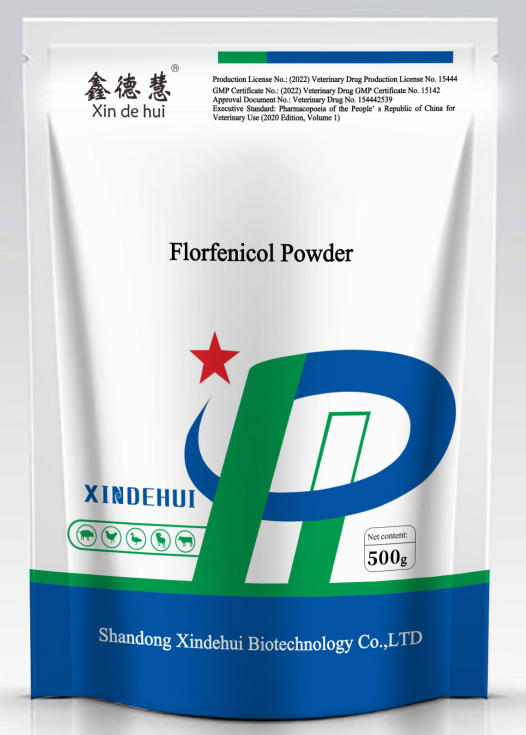
English Name: Florfenicol Powder
Chinese Phonetic Alphabet: Fubennikao Fen
【Main Component】Lincomycin hydrochloride
【Properties】This product is a white or almost white powder.
【Pharmacological Action】Pharmacodynamics Florfenicol is a broad - spectrum antibiotic belonging to the amphenicol class and acts as a bacteriostatic agent. It exerts its effect by binding to the 50S subunit of the ribosome to inhibit bacterial protein synthesis. It has strong antibacterial activity against a variety of Gram - positive and Gram - negative bacteria. Pasteurella haemolytica, Pasteurella multocida, and Actinobacillus pleuropneumoniae in pigs are highly sensitive to florfenicol. In vitro, the antibacterial activity of florfenicol against many microorganisms is similar to or stronger than that of thiamphenicol. Some bacteria that are resistant to amphenicols due to acetylation, such as Escherichia coli and Klebsiella pneumoniae, may still be sensitive to florfenicol. It is mainly used for bacterial diseases of pigs, chickens, and fish caused by sensitive bacteria, such as respiratory system diseases of cattle and pigs caused by Pasteurella haemolytica, Pasteurella multocida, and Actinobacillus pleuropneumoniae; typhoid and paratyphoid caused by Salmonella; fowl cholera, pullorum disease, and Escherichia coli disease in chickens; and bacterial septicemia, enteritis, and red - skin disease in fish caused by Pasteurella, Vibrio, Staphylococcus aureus, Aeromonas hydrophila, and enteritis bacteria in fish. Pharmacokinetics Florfenicol is rapidly absorbed after oral administration. Therapeutic concentrations can be reached in the blood after about 1 hour, and peak blood concentrations can be reached in 1 - 3 hours. The bioavailability is over 80%. Florfenicol is widely distributed in the animal body and can penetrate the blood - brain barrier. It is mainly excreted in the original form in urine, and a small amount is excreted in feces.
【Drug Interactions】(1) Macrolides and lincosamides have the same target of action as this product, which is bindingto the 50S subunit of the bacterial ribosome. When used together, mutual antagonism may occur. (2) It may antagonize the bactericidal activity of penicillins or aminoglycoside drugs, but this has not been proven in animals.
【Indications and Uses】It is an amphenicol antibiotic. Used for infections caused by Pasteurella and Escherichia coli.
【Dosage and Administration】Calculated based on this product. For oral administration: For pigs and chickens, 0.1 - 0.15g per 1kg of body weight, twice a day, for 3 - 5 consecutive days. For fish, 50 - 75mg per 1kg of body weight, once a day, for 3 - 5 consecutive days.
【Adverse Reactions】This product has a certain immunosuppressive effect when used at a dose higher than the recommended dose.
【Precautions】(1) Laying hens producing eggs for human consumption should not be used during the laying period.(2) It is toxic to chickens. Use with caution in laying hens during the laying period and in lactating ruminants.(3) Poultry with damaged immune function due to vaccination orother reasons should use this product with caution.(4) For animals with incomplete renal function,the dose should be appropriately reduced or the dosing interval should be extended.
【Withdrawal Period】Swine: 20 days; Poultry: 5 days; Fish: 375 degree-days.
【Specification】20%
【Packaging】100g/bag
【Storage】Seal and store in a dry place.
【Batch Number】
【Manufacturing Date】
【Expiry Date】